Paint used in American homes before 1978 can contain lead, and a kitchen remodel disturbs a lot of painted surface: cabinets, trim, window frames, walls that are cut open. The dust is the hazard, and federal rules say who may do that work for pay and how.
The rule
The EPA's Renovation, Repair and Painting rule says that, since April 22, 2010, firms performing renovation, repair and painting projects that disturb lead-based paint in homes, child care facilities and kindergartens built before 1978 must be EPA- or state-certified and must use certified renovators who follow specific work practices to prevent lead contamination.
Who certifies the firm
EPA runs the program in most states. Some states run their own programs in its place, authorized by EPA: Alabama, Delaware, Georgia, Iowa, Kansas, Massachusetts, Mississippi, North Carolina, Oklahoma, Oregon, Rhode Island, Utah, Vermont and Wisconsin, according to EPA's firm certification page. A firm working in one of those states is certified by the state.
How common these homes are
Among the towns on this site, about 48% of homes were built before 1980, according to the Census Bureau's American Community Survey for 2020 to 2024. The survey counts homes by decade, so 1979 is the nearest cut-off it offers to the 1978 date in the rule. Each town page shows the share for that town and for each of its ZIP codes.
What lead-safe work looks like
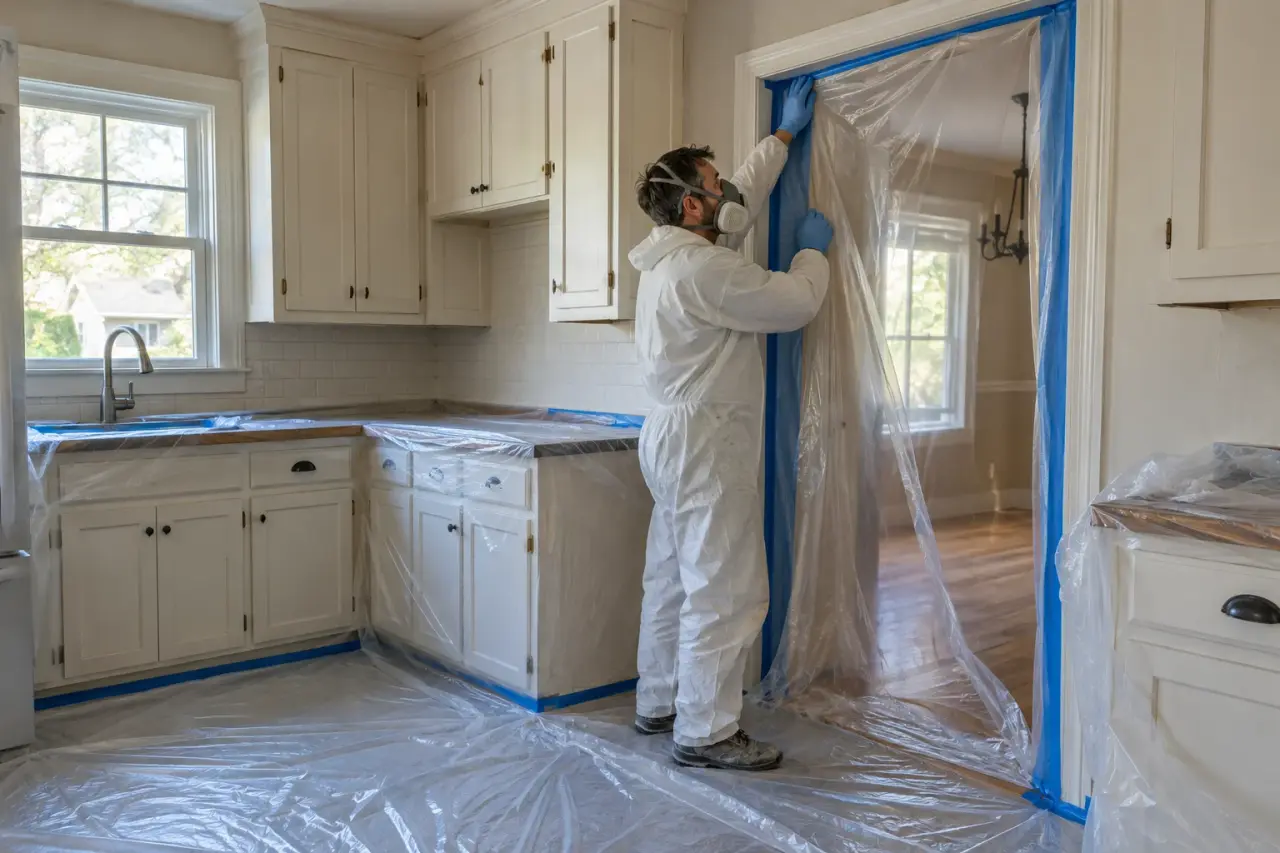
The work area is closed off with plastic sheeting taped over doorways and floors, and the household is kept out of it. Dust is kept down during the work and cleaned up with methods meant to capture it rather than spread it. Ask the firm to describe how it will set up, work and clean in your kitchen.
What to ask for
- The firm's certification, and the name of the certified renovator on your job.
- How the work area will be contained, and how the house will be protected.
- How the cleanup will be checked at the end.
See Checking a contractor for the other checks before you sign.
Updated 2026-10-12.