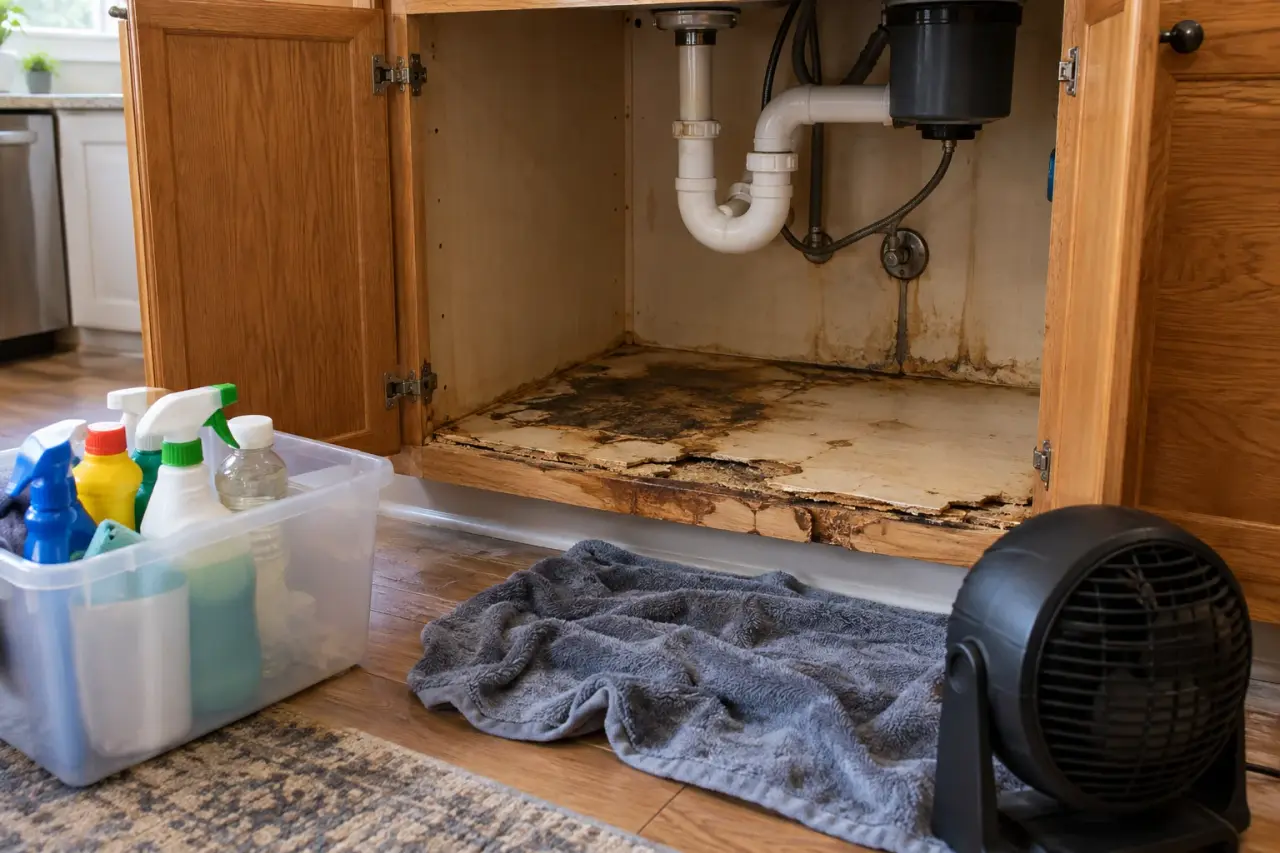
A slow drip under the sink, a dishwasher hose that let go, a refrigerator water line that cracked: kitchen leaks are common, and the damage often runs further than it looks. Particleboard cabinet floors swell, flooring lifts, and water travels under the cabinets where nobody sees it.
First, in this order
- Stop the water. Close the shutoff valve under the sink or behind the appliance, or the main valve for the house.
- Take photos of everything wet before anything is moved or thrown away: the cabinet, the floor, the wall, the failed part.
- Call your insurer if you may file a claim. What a policy covers differs from policy to policy, so ask them before you tear anything out.
- Dry it out. Empty the cabinets, open the doors, run fans. Wet drywall, flooring and cabinet boxes that stay wet are where mold starts.
What usually has to come out
- The sink base, if its floor or sides have swollen. Particleboard that has soaked up water does not return to its shape.
- Flooring that runs under the cabinets, if water got under it.
- Drywall behind the cabinets, if it is wet or stained.
- Neighboring boxes, sometimes, when the water spread along the run.
Repair or remodel
If one box and a section of floor are damaged and the rest is sound, the job is a repair, and the hard part is matching the old cabinets and flooring. If the replacement parts can no longer be matched, or the damage is wide, many owners use the repair as the start of a remodel. Your insurer's payment, if there is one, is decided by the policy; the remodel beyond it is your choice.
Permits
Fixing the pipe can need a permit even when the cabinets do not. The City of Las Vegas, for example, requires one for the emergency repair, alteration or replacement of damaged or leaking concealed piping. See Permits.
Updated 2026-10-12.